Showing posts with label war what is it good for absolutely nothin. Show all posts

Tuesday, November 11

"If in some smothering dreams you too could pace . . . "


It's one of those childhood memories which I don't know when it happened and I'm not 100-percent positive where it happened, but I think I was about eight or nine years old, not that long after we'd moved to Tennessee, and we were making one of our fairly regular weekend trips to Jonesborough, the oldest town in Tennessee and the site of quite a lot of extremely well-preserved history. I think we were walking by some kind of memorial in front of the county courthouse that listed the names of people from Washington County who had died in various wars, and my dad pointed out that the soldiers who had died in World War I were listed under "The Great War." He asked me why I thought it said that instead of World War I, and when I told him I had no idea, he said, "Because they didn't think there could ever be another one. That's why they called it 'the war to end all wars' -- they thought that after that war, there could never be another one that would be that bad."

That memory, as hazy as it is, was the first thing that popped into my head while I was reading this post by Robert Farley and this post by Matthew Yglesias (both linked here) about how November 11 was originally designated Armistice Day but has come to mean something quite different under the "Veterans Day" moniker. According to Wikipedia, the name was changed in the mid-1950s to expand the holiday's remembrance to veterans of all wars, and while I obviously think that honoring our veterans is a right and necessary thing to do, I wonder if something else important wasn't lost in the change -- something that we might do well to reflect on now more than ever.

People in the late teens in 1920s referred to WWI as "the war to end all wars" not only because they thought there could never be another one that big, but also because they thought "The Great War" had been so definitive and cathartic that it reordered the world in such a way that we'd never need to have another war that big again. Well, obviously that wasn't how things played out, and as Yglesias alludes to, the second world war and the Cold War, among many other assorted conflicts and miseries, were more or less a direct result of that supposed new world order that was created in the wake of World War One.

That's about as much evidence as anyone could need that "war for peace" just doesn't work, and yet that's precisely the "argument" (if one can call it that) some people were making in the run-up to the second Iraq war, not to mention the argument that some still make in favor of military action against Iran. This idea that war can be a crucible out of which wonderful new democracies and alliances can be formed, it just doesn't hold any water, and yet some people still cling to the idea that America can reshape the world in our image and make it conform to our ideals if we're just willing to put enough military might behind it.

Look, I'm not saying that no war should ever be fought, or that walking around putting daisies in the barrels of soldiers' M-16s is the way to solve all the world's ills. Some wars need to be fought; the United States has both a need and a right to defend itself. But it's one thing to get involved in a war for the sake of protecting a nation's sovereignty or security; it's another thing entirely to start a war thinking it can change the world for the better. I can't think of a single instance in which that has ever worked. It all goes back to an excellent quote from Sadly, No! four years ago, and that I've invoked several times since then: War never doesn't hurt. You might or might not gain something from fighting in a war, but you are guaranteed to lose something -- and I continue to be confounded by the number of people who still seem so willing to take those odds.

War, by its very definition, doesn't preserve peace; the historical evidence shows us that neither does it leave peace in its wake, at least not a very enduring one. And while there's no sure-fire, airtight method for achieving peace, not starting wars is pretty much the most effective one anyone's ever been able to come up with. If you'll permit me to indulge my '80s-movie geekdom and involve a famous-to-the-point-of-cliché line from "WarGames," "The only winning move is not to play."

And I think that's worth keeping in mind today. While we're honoring the men and women who've had to make huge sacrifices for our country, let's not forget the circumstances and mistakes -- by other countries' governments as well as our own -- that forced them to make those sacrifices to begin with. And let's commit ourselves to not making those same mistakes again.

Wednesday, March 26

A memo from the desk of Arnold T. Pants, Esq.:
Bloggerpalooza rides again. Possibly. I think.


What wine goes with Doritos and Krispy Kremes served off the trunk of a Toyota?

I am horribly, disgracefully negligent in getting the word out about this, but Georgia's spring game is a week from Saturday, and you know what that means -- Bloggerpalooza '08 is finna jump off like a motherfucker, or whatever the kids are saying these days. Bloggerpalooza, in case you're not familiar with the concept, began in 2006 as a tailgate gathering of Georgia sports bloggers and fans of same in celebration of G-Day; well, that was the idea, but late starts and a massive downpour dialed things back just a tad, to the point where it was just me, Kyle King, and two other folks cowering in the North Campus parking deck eating fried chicken. Last year's installment was rather more successful, featuring dramatically increased attendance, copious amounts of booze, and drunk people somehow falling out of trees barely big enough to even cast a shadow. I don't think it's any coincidence that Georgia's 2007 season was substantially better than 2006, so people, in spite of my half-assed planning, we need to make this one good! For the sake of the Dawgs!

Kickoff of the G-Day game is 2 p.m.; an 11 a.m. start to the tailgating festivites will give us about three hours of eatin' and drankin', yesno? (Actually, you guys can start whenever the hell you want; I'm just gonna need a little extra time to make it over from Birmingham.) Weather permitting, we'll meet in the same spot as last year, on the north quad right in front of the main library (map here), and if the weather doesn't cooperate, fuck it, we'll meet up at Mellow Mushroom as a fallback.

Please to be leaving your RSVPs and whatnot in the comments threads, and be sure to also include a) what you can bring, whether it's foodstuffs or lawn-lounging-furniture-related-type items, and b) an e-mail address so that I can send out my cell number to all prospective attendees before the big day. Non-bloggers and/or non-Georgia fans are also welcome. Hope to see you there.

Popcrunch has done all of us in the collegiate-sports-blogging community a tremendous service by ranking the top 50 schools in D-I based on the relative hotness of the female student population, thereby giving all of us some actual statistical evidence to turn to when we've fought each other to a stalemate based on actual football prowess and decide to turn to who's got hotter girls. Not surprisingly, the SEC comes out on top, providing six of the top 10 (including Georgia), but the Pac-10 isn't far behind. Popcrunch names Arizona State #1, which is fortuitous for two reasons -- one, I'll be heading out to Tempe for the Georgia-Arizona State game this September, and two, well, I'll just direct you to the previous post.


I'm coming, ladies. Prepare.

I'm going to try and introduce a whole new phrase into the colloquial English lexicon: "It's because the surge is working." Anytime someone comes at you with a bit of momentous news, good or bad, that you really don't care about in the slightest, just respond in a monotone voice with some variation on "It's because the surge is working." I'll give you a few examples of how to use this:

YOUR FRIEND: Did you hear? Bob just got a promotion at his job! And it comes with a big raise!

YOU: Well, that proves the surge is working.


YOUR FRIEND: Man, did I get some bad news from the doctor today. He said I've got kidney stones.

YOU: That's because the surge is working.


See, there's practically nothing it won't work with -- just as there isn't any development in Iraq that won't make the Bush administration say the surge is working. If violence is down, huzzah, that proves the surge is working. And if violence is up, and skirmishes are erupting all over southern Iraq between the government and the militias, then guess what?

WASHINGTON (AFP) — The Pentagon on Wednesday said an eruption of violence in southern Iraq, where US-backed government forces were battling Shiite militias, was a "by-product of the success of the surge."


Forget Colt 45 -- this, apparently, works every time.

That's right -- it's because the surge is working! (Hat tip: Atrios.) I dare say that if Nouri al-Maliki won "American Idol" or the rivers started running red with Marinara sauce, that'd somehow be connected to the success of the surge, too. So go ahead, people -- whip out this phrase any time you hear something you're just not interested in. And if this whole idea sounds really stupid to you, then that just means the surge is working! BOO-YA!

You know, I'm really trying to do a better job of being more forgiving and spending less time and energy holding grudges, but every once in a while I see something that just plain lifts my spirits and makes me break out in a schadenfreude-eating grin, and yesterday that something was the news that Hawaii defensive back Keenan Jones had been arrested for "unauthorized entry into a motor vehicle" and second-degree assault.

If you think you remember seeing Jones's name on this blog before, you have: He was the little turd who laid a late cheap shot on Mikey Henderson during Georgia's first punt return in the Sugar Bowl and spent the rest of the game flapping his gums at everyone from Georgia's players to the referees themselves. Jones had already been busted for assaulting his girlfriend exactly one year ago; now he's got two felonies to add to his rap sheet. Jones has yet to do anything to back up his mountains of on-field trash talk, and it's safe to say he probably won't get the chance now, unless Halawa Correctional Facility has a "Longest Yard"-style gridiron matchup planned in the next few months.

Keenan, in the spirit of Christian love and forgiveness, I'd like to pass along some advice to you from Diedrich Bader's character in "Office Space": "Watch out for your cornhole there, bud."


Is it just me or is he already looking a little nervous?

Chuck Norris is apparently cranky that his homeboy Mike Huckabee is out of the race for the Republican presidential nomination, because he spent last weekend penning this column rehashing the usual right-wing tropes about how the U.S. was so much better back before we started regulating handguns and letting gay people out of the closet. He doesn't even have the self-awareness to come up with a more imaginative title than "Guns, God and Gays," which is actually the cliché used by snotty, godless pinko liberals like me to explain how the GOP is continually able to sucker rural red-staters into voting against their economic interests. But this is the part that really got me:

Lastly, I was appalled when I read the American Family Association report that Friday, April 25, "several thousand schools across the nation will be observing 'Day of Silence (DOS).' DOS is a nationwide push to promote the homosexual lifestyle in public schools. … DOS is sponsored by an activist homosexual group, the Gay, Lesbian and Straight Education Network."


If you're thinking that the American Family Association is perhaps not the best place to go for objective, factual information on the Day of Silence, here's what it's actually about:

The National Day of Silence brings attention to anti-LGBT name-calling, bullying and harassment in schools. This year’s event will be held in memory of Lawrence King, a California 8th-grader who was shot and killed Feb. 12 by a classmate because of his sexual orientation and gender expression. Hundreds of thousands of students will come together on April 25 to encourage schools and classmates to address the problem of anti-LGBT behavior.


Yup, that's what Chuck and the AFA have such a big problem with. They're not just against the "promotion" of the "homosexual lifestyle," they're against the very idea that gay kids shouldn't be bullied or assaulted in schools.


There is no chin behind Chuck Norris's beard, only another fist . . . aimed at gay kids.

Maybe Chuck Norris is just a victim of his own success -- after vanquishing Hezbollah, communism, and the Octagon, he has so thoroughly rid the world of evil and oppression that he's reduced to picking on gay kids in schools. Chuck, I appreciate your hard work and sacrifice, but you know what? You've turned into kind of a pussy.

Yes, I said it! If Lone Wolf McQuaid has a problem with it, he can come and find me.

Wednesday, March 19

Five years ago today.


I've made it sort of a tradition at this and the last blog that I did to link back, every year on this day, to the original post I wrote (for a blog that's no longer in existence) the day after the U.S. invasion of Iraq began in 2003. That post, along with the blog that carried it, has disappeared, but this being the fifth anniversary of the start of the war, I figure it's as good a time as any to recount that day from scratch.

Incidentally, the weekend before the war started, I got up at midnight and drove 11 hours all Saturday morning up to Washington to participate in an anti-war protest. It was an amazing day -- reports said anywhere from 50,000 to 100,000 people showed up to march from the Washington Monument around the White House and back -- and at the time I remember thinking that maybe, just maybe, we really might have been able to make a statement and convince somebody in the halls of power to pull back from the brink of war with Iraq.

That was pure naivete, of course, but honestly, it wasn't the stereotypical naivete of the protestor who thinks he's going to change someone's mind just by holding up a certain sign or marching down a certain street. It was the naivete of an American of 25 years who had been taught to believe that our country wouldn't go to war just for the hell of it, that we'd actually need a serious rationale and concrete evidence of an imminent threat to order the wholesale invasion of a sovereign country. Unfortunately, even as I headed back down I-66 toward home the very next day, reports from the emergency summit held by the Allied powers in the Azores indicated that maybe we weren't that kind of country any longer. Two days later, as I walked home from a Wednesday-night church service, those fears were confirmed.

By midday Wednesday, we all pretty much knew what was coming, so in the intercessional of that church service, Father Frank started one prayer with, "For the innocent people in Iraq, who are -- " And I remember very distinctly the catch in his voice that followed, almost as if he himself couldn't believe what he was saying. He ended it with, " -- preparing to be bombed, let us pray . . . " And at that point I realized I was crying, a grown man shedding actual tears in a church, over both the innocent Iraqi civilians who were about to die and the country that would soon have their blood on its hands. I had been dreading for days the start of military operations against Iraq, but for the first time someone had articulated in explicit terms the true shame of what that was going to entail. And I cried.

And as I walked home that evening, the thing that struck me most was just how unaffected everybody seemed -- cars drove down 20th Street with their windows down and music playing; people still ate and drank and laughed outside Dave's Pub and Ruby Tuesday. You would never have known that a war was starting, one in which the United States -- for the first time in its history -- was firing the first shot. That street scene was emblematic of just how casually we as an entire country were approaching this war, not just the citizens but the leaders running the show from the Pentagon and the White House. They thought this would be an easy mop-up of a crippled dictatorship, and the rest of us, perhaps hoping that a quick-'n'-easy invasion would assuage the magnitude of what we'd done, followed their example.

Five years later, of course, we know better -- well, a substantial majority of us do. In the most recent poll concerning Iraq, two out of three people said they opposed the war; barely one-third of respondents said the situation in Iraq back in 2003 was worth going to war over. More than seven in ten saw a connection between massive U.S. spending on the war effort and the flagging economy. It's taken us a while to learn the lesson of just how seriously war has to be taken, but many of us have learned it.

Unfortunately, some have not, and the three remaining presidential candidates represent a fairly wide spectrum of opinion in that regard. You've got Obama, who opposed the war when it started and continues to oppose it now; you've got Clinton, who was for the war in the beginning, now wants to bring it to a swift end, but hasn't been entirely convincing when talking about how she would act if a similar situation presented itself again; and then you've got McCain, who was for the war in the beginning, is still for it, and apparently would do it all over again the exact same way if he had to.

Perhaps knowing that his earlier vote on the war authorization puts him in conflict with a growing majority of the American public, McCain has said that the 2008 election shouldn't be about a vote that happened nearly six years ago. To some extent he's right; we're in Iraq now, we can't go back and change that, the focus now should be on what we do in Iraq (and the entire Middle East) going forward, and basing the entire election on a litmus test of what one did or didn't do in 2002 doesn't aid that.

So contrary to what a lot of people might assume, my vote in this year's election isn't going to be based on the war-authorization vote that took place six years ago. It's going to be based on whether a given candidate, like two-thirds of the American people, have learned anything from the past five years. Obama has; Clinton has, to some extent; McCain, unfortunately, has not.

We're occupying a country where the people don't want us around and where we really never should have been to begin with, and McCain says he's prepared to keep us there another 100 years. We're stretched thin by trying to manage major military operations in two separate countries, and McCain seems fully prepared to launch us into a third -- and he appears to be no less uninformed or flippant about it than so many of us were about Iraq five years ago. It is a sad irony that the only one of the three candidates to have actually experienced war firsthand seems to have learned the least about the magnitude of its dire effects on the nations involved.

And learning from one's mistakes is all I'm asking for. I don't care whether Hillary Clinton or John McCain ever apologize for their original votes on the war authorization; all I ask is for some acknowledgment that they've grown wiser in the six years since, so that we won't be repeating that history anytime soon. And more than anything else, I want to have some kind of confidence that I won't be bringing up my children or grandchildren in the kind of country that looks for reasons to start wars, as opposed to reasons to keep them from happening.

Because war represents a lot of things, but most of all, it represents a failure -- a failure on the part of the world's most powerful people to heed the most basic instruction God ever gave us: To love one another, even the people we hold up as our enemies. Sometimes that's a failure on the part of only one side in a conflict, sometimes it's both. And yes, sometimes a war has to happen. But the only way we're going to be able to move this country forward from the embarrassment and heartbreak of the last five years is to find leaders who can tell the difference between the wars that have to happen and the wars that don't.

A large part of this nation seems to have learned to be able to tell that difference -- maybe even some of the people who were out drinking and laughing in Five Points on March 19, 2003. They deserve nothing less than leaders who can do the same.

Friday, September 14

Friday Random Ten+5, what is it good for? Absolutely nothin'!

If you only read one post on the anniversary of 9/11 -- well, you've probably already read hundreds, so this advice is coming a bit late, but read ACG's post at Practically Harmless on the yawning gap between the awesome things we could've done in the wake of 9/11 and the decidedly non-awesome things we did do.

And, it got me to thinking: "War on Terror" was a pretty good phrase when we first started using it right after 9/11, because we were all pissed off and we knew (or thought we knew) whom we were fighting, and after all, who likes terror?, but in the six years since, one thing has become pretty clear -- the War on Terror fucking sucks. We don't know whom we're fighting, we can't pin them all down to a single place, it's apparently not even serious enough for the government to ask us to all pull together and sacrifice for our boys in the field like they would've done in previous wars. Now, I'm not going to sit here and say that all wars are bad and/or unnecessary -- in fact, we've fought plenty of wars that were not only necessary but way better than this one, and with that in mind, this week's +5 is Five Wars That Were Way Better Than The War On Terror.


Hundred Years' War
These days, most wars try to make themselves look bigger than they actually are, as you've no doubt noticed every time George W. Bush opens his mouth. The Hundred Years' War, though, is one of those rare major military conflicts that actually sells itself short -- the thing went for 116 years, give or take a few months. The war actually was comprised of a series of lengthy conflicts, but they all basically centered around an ongoing dick-swinging contest between England and France to see who was the biggest and baddest superpower, back when either of those countries could make such a claim without inducing fits of laughter. The war is remembered for bringing such innovations as the longbow into the military mainstream and for opening the doors to allowing peasants and farmers to join in the glory of battle formerly reserved only for knights and noblemen . . . which is, uh, great, I guess.


Punic Wars
Besides having a name that's just plain fun to say, the Punic Wars matched up the two major empires of their day (Rome and Carthage) in a conflict that changed the course of history by solidifying the Roman Empire as the Western world's one true superpower. This war's sequence of events included such cool shit as Hannibal crossing the Alps on an army of elephants.


Cold War
True, this war didn't involve a single shot being fired, but honestly, hasn't the "War on Terror" made you miss the Soviet Union just a little? With the Cold War, we could at least be afraid of angry, faceless Slavs piloting red-star-decorated Tu-95 bombers packed with nuclear warheads; in the War on Terror, we're supposed to be afraid of hairy Saudis carrying boxcutters. The Cold War inspired stuff like Ronald Reagan's "Mr. Gorbachev, tear down this wall" speech and an entire generation of James Bond films; the War on Terror has inspired little more than George W. Bush whining "it's hard work," and there's no way you could write an entire 007 film around it unless you were willing to put the Bond girl in a fucking burkha. The Cold War was just plain sexy, and honestly, if Vladimir Putin wants to get things started up again by trying to reassemble the Soviet Empire, I'll take that any day over chasing Osama bin Laden's ass around a cave in Pakistan.


World War II
The "last great war," not just because it involved the United States leading the Western world to victory over an evil government truly bent on global genocide but because of the way it changed our culture: movies like "The Longest Day" and "The Great Escape." Icons such as the P-51 Mustang and the Jeep. George C. Scott as "Patton." Legends such as Winston Churchill and FDR. Aircraft nose art. The video game Wolfenstein 3D. Calls to service such as rations, bond drives, and "Rosie the Riveter" that truly inspired the folks back home to feel a sense of ownership -- and urgency -- in what the boys were doing overseas. Yeah, we had to drop two nukes to win it, which kind of puts a damper on things in a historical sense, but still, overall, this is how you fight a fucking war, people.


Revolutionary War
A group of ragtag Americans who, in most cases, couldn't even afford to put uniforms on their backs succeeded in permanently booting the world's preeminent superpower off of their shore. Conveniently ignoring the parallels to our current situation, that's pretty fricking cool, isn't it?

Does that have you in a fightin' mood yet? Anyway, here's the Ten:

1. Goldie, "Temper, Temper" (Grooverider remix)
2. David Bowie, "I'm Afraid of Americans"
3. Big Audio Dynamite II, "In My Dreams"
4. Phil Collins, "Against All Odds (Take a Look at Me Now)"
5. Thom Yorke, "Black Swan"
6. The Breeders, "Cannonball"
7. Depeche Mode, "My Joy" (7" mix)
8. Underworld, "Push Upstairs" (Roger S. Blue Plastic People mix)
9. David Holmes, "Zero Tolerance"
10. Nine Inch Nails, "Wish"

Your own Tens and/or most fondly remembered wars -- be they World, Opium, Star, or Cola -- in the comments.

Thursday, May 3

Thursday Mystery Meat: The stupid, it burns!


· Former Secretary of Defense Donald Rumsfeld, last seen impersonating Robert McNamara on an even grander scale, is receiving the Claremont Institute's "2007 Statesmanship Award" at their . . . wait for it . . . Churchill Dinner. As in Winston Churchill. Go ahead, wrap your brain around that; I'll give you a second. You may even need to have a Gatorade when you're done.

· Done? OK, now wrap your head around this: a story headlined "Lohan Plans Big 21st-Birthday Bash." OK, this is a girl who's an empirically verified drunk skank, and has spent the better part of the past year sashaying in and out of rehab like it was a changing room at Banana Republic. Why, exactly, should we give 0.001% of a shit that she's turning 21? Doesn't it seem like she's kind of been unofficially celebrating that milestone for a while now?

· Speaking of young ladies apparently in desperate need of attention, any of y'all heard about recently divorced Philadelphia news anchor Alycia Lane and the risqué photographs she sent to Rich Eisen, formerly of "SportsCenter" and currently of the NFL Network? Apparently this is far from the first time Lane decided to, uh, put herself out there for the attention of a potential suitor, though there was just one problem this time around -- Eisen is quite married, and to a real firecracker it sounds like, if his wife's reponse to Lane's e-mail is any indication. I'm glad Eisen, who's always come across as a pretty stand-up guy, didn't get drawn into any of this; as for Lane, I'm sure it's only a matter of time before her photos show up on Deadspin or The Smoking Gun or something. Not that I'm, uh, looking forward to that or anything.


All together now: You're with me, leather.

· There's a lot about this interview with "military historian" Victor Davis Hanson that should inspire eye-rolling and the making of the jerk-off gesture, but this bit is really what gets me:

All these Democrats now, for three or four years, have not just opposed George Bush, and not just opposed neoconservative idealism, but they've demonized it to such a degree that they've almost made Bush the equivalent of the enemy.


OK, let me get this straight.

For four years now -- more than four years really, if you count the run-up to the war -- anti-war liberals like myself have been insulted and condemned by people on the right. Some have merely said we're hurting the country by criticizing the incompetence of the Bush administration; some of them continue to go so far as to accuse us of colluding with the enemy because we have expressed outrage at the government's conduct in scandals such as Abu Ghraib and are calling for an end to the Iraq war. But now Victor Davis Tecumseh Bonaparte Hanson wants to complain about his side being "demonized" into "the equivalent of the enemy"? All I can say is that if "neoconservative idealism" is now regarded with the same derision as the flat-earth theory and the geocentric view of the universe, you might first want to start with the practitioners of said philosophy to see why it's become such a joke.


Tiny-violin virtuoso Rei Takahama plays a haunting solo just for Victor Davis Carmina Burana John Jacob Jingleheimer Hanson.

· On a related note, we have breaking news out of Washington, where George W. Bush has made a shocking announcement in a speech to the Associated General Contractors of America:

By the way, in the report it said, it is -- the government may have to put in more troops to be able to get to that position. And that's what we do. We put in more troops to get to a position where we can be in some other place. The question is, who ought to make that decision? The Congress or the commanders? And as you know, my position is clear -- I'm the commander guy.


What does this mean? Is Bush both the "commander guy" and the decider, who decides what is best? Or is he relinquishing his decider duties to focus on being the commander guy? If so, will he be naming an Interim Decider until an official nominee can be selected for confirmation? Or is that just going to fall to Dick Cheney by default?


· Question #1 for you readers: What do y'all think of Delta's new colors? Honestly I think they're kind of boring, but at least the airline's out of bankruptcy and hasn't gotten bought up by someone who wants to move the headquarters across the country. Given the choice between a boring color scheme and half the population of Clayton County being unemployed, I'll take the former.

· Question #2: What if the managers of all 29 major-league baseball teams who aren't the San Francisco Giants got together and agreed to intentionally walk Barry Bonds every time he came up to bat, thus depriving him of the chance to break Hank Aaron's career home-run record? Tell me, People Who Know More About Baseball Than I Do (Which Is Just About Everyone), is there a rule against that? Would they be in violation of some kind of conspiracy or anti-trust legislation?

At the very least, I think it's something that should be looked into.

Wednesday, May 2

Oh, and another thing.

Throughout the debate over Congress's troop-funding bill, one of the most oft-repeated talking points from Bush and his remaining allies is that they don't want to set "artificial timetables" for the troops or for the Iraqi government's progress in meeting its various goals. But isn't "artificial timetable" kind of redundant? And doesn't the fact that Bush would use such a redundancy kind of indicate how he still just doesn't get it?

I mean, the whole point of a timetable or a deadline is to give someone a date for doing something that they wouldn't meet if left to their own devices. If my boss drops a stack of manuscripts on my desk and doesn't give me any instruction other than to copy-edit them, I might get it done in, say, two weeks, depending on how much I allow factors to intrude (such as other projects, meetings, the degree to which I scrutinize and chop up the words on the page, or my general scatterbrainedness). But if she has to have it in one week, then she'll tell me so. Obviously one week isn't necessarily the amount of time I'd give myself if I had the choice, but that's when my boss needs it, so I don't have a choice.

Or, to look at it another way, what would constitute a non-artificial timetable? I guess the only way would be for my boss to somehow intuitively divine that, based on my existing workload and editing M.O., I would "naturally" get through the stack of manuscripts in two weeks -- and then tell me I could take two weeks to do it. In which case there was no point in setting a deadline to begin with.

What Bush wants to do in this situation is drop the manuscripts on Maliki's desk and give him the "whenever you get around to it" instruction -- in other words, the exact same thing he's been doing for four years. He doesn't have the guts to hold anybody to anything more than that, and this "artificial timetables" complaint is just to cover up for the fact that he doesn't want to set any deadlines or timetables period. The Democrats' funding bill, on the other hand, aims to make him. And that's what this debate really boils down to -- "You need to get this done" versus "Hey, we'll stay here until you get around to it." Again, a deadline is a date you set for someone that they probably wouldn't meet if it was just left up to them -- thus without a deadline, "just leave it up to them" is more or less Bush's official policy. Is that something you feel comfortable with?

Monday, April 30

In defense of timetables.


Those who cannot learn from history are doomed to . . . something something.

It's kind of ironic, I guess, that exactly four years to the day after our Mission was declared Accomplished by the president, he finds himself embroiled in a debate that mainly serves to remind all of us just how un-Accomplished it in fact is. Some might call that "karma," but that would be looking to the past, and I'm interested in looking to the future for a little bit. What if, rather than surrendering or declaring defeat, the Democrats' plan for a pullout timetable was actually the only real way to win in Iraq?

First of all, since I know individual opinions of what constitutes "winning" in Iraq could be as varied as snowflakes, let me tell you what my ideal situation is: My ideal situation involves an Iraq with a stable democratic government that can run its own legislative affairs and its own defenses -- and can do so by itself, without requiring a single American soldier on hand for any of it. That's not so wacky, you might be saying. And obviously I think you're right, but I think my scenario does sound wacky to a lot of the neocons in the Bush administration, because I think their intention from the get-go has been to rebuild Iraq as a forward operating base where our troops will be stationed in perpetuity. The fact that our "phased pullout" from Saudi Arabia began almost simultaneously with the invasion of Iraq is not, I think, a coincidence, and there's plenty of other evidence to indicate that our presence in Iraq is not something the Pentagon is in any hurry to end.

And I think even the most ardent supporters of Bush's Iraq policy, to the extent that he has one, would have to admit that he has taken a decidedly open-ended attitude toward our troop presence there, particularly as it relates to the Iraqi government. Obviously he hasn't given any indication of a date when our troops might be able to come home, and it doesn't even seem like anyone in the administration is leaning on the Maliki government particularly hard to take control of their own military and their own defense. That hands-offness has brought us to a point where Maliki is now actually purging security officials who are policing Shiite militias too aggressively.

How can Maliki get away with doing stuff like that, particularly at a time when the rest of his military is languishing in incompetence and disarray? Simple: Because the Bush administration has let him. Bush hasn't given any indication that U.S. troops are going to be leaving anytime soon, and he certainly hasn't exercised a lot of oversight over the Maliki government in terms of holding them to some of the goals that supposedly have been set, so as far as Maliki is concerned, he can just sit back and let the American troops do the dirty work for as long as he wants; he has been given absolutely no incentive to do otherwise. You'd think that the Bush administration would be upset about this, but apparently they're not. And again, it fits into the idea of the U.S. troop presence as being more or less permanent.

One way or another, someone's going to have to light a fire under the collective ass of Maliki's inner circle and get them to put some actual muscle behind the development of the national government and the training of the Iraqi defense forces. Bush doesn't appear much interested in doing so; in fact, the Pentagon has just de-prioritized the training of Iraqi troops. So maybe we're just at a point where someone's going to have to set a date. People on the right may look at a timetable as a "surrender," as a date until which the insurgents can officially stop waiting us out, but when you frame the debate in those terms, what alternative is there other than keeping our troops in Iraq forever? And if we don't give the Maliki government some kind of indication as to when we expect them to get their shit together, what makes us think they're ever going to do it?

Look, I'm not someone who considers the Democratic timetable plan a perfect option; anyone who thinks there are any perfect options left at this point is pretty much kidding themselves. Maybe you can quibble with precisely when they're saying we should have the troops out of the country (or at least out of the most violent central region). But when someone says that pulling the troops out of Baghdad would leave the region open to violence and chaos, I have to ask them, just exactly what the hell is going on there now? How much worse can things get, really? Why should we be forcing our military to chase their own tails in the midst of someone else's civil war when we could move them to the northern Kurdish territory where they could do some good -- keeping a closer eye on the Iranian border, perhaps? And given the choice between forcing the Iraqi government to confront this and letting them skate, shouldn't we be leaning toward the former?

I mean, if what you want is a permanent U.S. presence in Iraq, then come right out and say that. Certainly you wouldn't be the only one. But I think you'd also be in a definite minority, because the American public was sold on a quick, easy, fairly sacrifice-free invasion of Iraq, and if current public opinion is any indication, they've gotten pretty sour at the fact that that didn't happen. If we're ever going to start clearing a path for our troops to come home, then at some point we're going to have to tell Maliki and his government that the time has come to either shit or get off the pot. And again, while the Democrats' plan for doing that may not necessarily be perfect, they seem to be the only ones who are even looking in that direction at this point. It's time for Bush to ask himself whether he's going to sack up and actually hold Maliki to account for anything, or whether he's going to allow himself to be remembered as the president who slunk off with his tail between his legs and did everything he could to make sure he could dump the Iraq problem off on the next guy.

ADDED: Good freaking Lord. The irony . . . is . . . killing . . . me.

Wednesday, April 4

Damn! Do we have to take them?

The 15 British sailors captured by Iran have been freed -- just freed, without a skirmish or a full-scale invasion or anything.

Strangely, I have the sense that some people are very disappointed by this.

(Hat tip to Digby.)

Sunday, March 18

War, peace, and being "serious."


I know it's become a little personal blog tradition to drag this old chestnut out every year around this time, but here's what I wrote the day the Iraq war started, March 19, 2003.

I hope it doesn't sound like I'm only whipping this out again to sound morally superior or anything, because there is a larger point to it than that. I'm not looking to be held up as some kind of foreign-policy expert, and I'm not even demanding that people who were for the war back in 2003 all admit they were wrong and tell me how brilliant I am. All I want is for people to take war seriously, to realize that it has horrible consequences for everyone involved and that there's no such thing as an "easy" war, no matter what the people in charge tell us. I think a lot more people get this now than did four years ago, but there are still quite a few important people who apparently don't.

There seems to be this lingering insistence at the elite levels of our government and media that in order to be "serious" about national security, one has to be in favor of war whenever and wherever one is proposed. This is the kind of thinking that holds up someone like Joe Lieberman -- who fell in lockstep with the Bush administration's Iraq plans from the get-go and who has never once called for any kind of change or accountability for what has been almost universally decried as a disastrous policy -- as a "serious" thinker on foreign policy, while people like Rep. Nancy Pelosi and Sen. Patrick Leahy, who voted against the war resolution in 2002 and who have demanded that the Iraqi government actually be held to held to account for some of their promises and stated goals in exchange for the continued American presence there, as not serious.

Imagine that you come to me complaining of terrible migraine headaches, and I tell you (based on my years of advanced medical training) that the best way to cure this is to bang your head against a brick wall. You think this is kind of weird, but you decide to go ahead with it. You're banging your head against a wall, you're bleeding all over the place, you're cracking your skull, and people are coming up to you saying, "This is ridiculous! Stop beating your head against the wall!" But I'm standing next to you the whole time saying, "You just want him to stop before his migraine goes away? You're just not all that serious about helping him, are you?"

Look, I know that September 11 changed a lot of things about this country and how we perceived our need to act in the world, and I'm not saying that all war has to be dismissed out of hand; the invasion of Afghanistan, for instance, was immediately needed to oust a regime that had directly assisted al-Qaeda and aided in carrying out their terrorist attacks. But war is something that should be wielded only as a last resort, and it's clear that that's not how it was viewed with respect to Iraq. Bush continues to claim to this day that all diplomatic avenues had been exhausted with Iraq and that the country presented an imminent threat, but the example he uses to prove this point -- Saddam Hussein supposedly kicking out the UN weapons inspectors -- isn't even true, because it was the Bush administration who ordered the inspectors out so that they could start bombing. We could've pulled up short of an all-out invasion of Iraq; we just didn't want to. Why?

Now the target du jour is Iran, and we have people both in the blogosphere and in the government insisting that "all options remain on the table" with regard to attacking that country -- all options, evidently, except negotiation. There may yet come a time when relations with Iran deteriorate to the point where war becomes the only option, but how can anyone say that we're at that point already? And how can anyone who says that be considered "serious" about national defense when we're already overextended by major military operations in two other Middle Eastern countries?

Just think about what war means is all I'm asking, people. War is never an easy thing. War means thousands of people getting killed; war means billions, if not trillions, of dollars getting thrown into the fire; war means entire societies getting scarred for generations. As Sadly, No! so succinctly put it three years ago, War never doesn't hurt. If we've learned nothing else after four years of agony in Iraq, I hope we've learned that. But I wouldn't even be bothering to repeat this if I thought everybody had.

Monday, March 12

The clock strikes thirteen . . .

Allow me to swipe a page from the late, great Billmon's book.

To undermine Iran, which is predominantly Shiite, the Bush Administration has decided, in effect, to reconfigure its priorities in the Middle East. In Lebanon, the Administration has coöperated with Saudi Arabia's government, which is Sunni, in clandestine operations that are intended to weaken Hezbollah, the Shiite organization that is backed by Iran. The U.S. has also taken part in clandestine operations aimed at Iran and its ally Syria. A by-product of these activities has been the bolstering of Sunni extremist groups that espouse a militant vision of Islam and are hostile to America and sympathetic to Al Qaeda.

One contradictory aspect of the new strategy is that, in Iraq, most of the insurgent violence directed at the American military has come from Sunni forces, and not from Shiites. But, from the Administration's perspective, the most profound -- and unintended -- strategic consequence of the Iraq war is the empowerment of Iran. Its President, Mahmoud Ahmadinejad, has made defiant pronouncements about the destruction of Israel and his country’s right to pursue its nuclear program, and last week its supreme religious leader, Ayatollah Ali Khamenei, said on state television that "realities in the region show that the arrogant front, headed by the U.S. and its allies, will be the principal loser in the region." . . .

Some of the core tactics of the redirection are not public, however. The clandestine operations have been kept secret, in some cases, by leaving the execution or the funding to the Saudis, or by finding other ways to work around the normal congressional appropriations process, current and former officials close to the Administration said.

A senior member of the House Appropriations Committee told me that he had heard about the new strategy, but felt that he and his colleagues had not been adequately briefed. "We haven't got any of this," he said. "We ask for anything going on, and they say there's nothing. And when we ask specific questions they say, 'We're going to get back to you.' It's so frustrating."

-- Seymour Hersh, "The Redirection"
The New Yorker, March 5, 2007


The speech had been proceeding for perhaps twenty minutes when a messenger hurried on to the platform and a scrap of paper was slipped into the speaker's hand. He unrolled and read it without pausing in his speech. Nothing altered in his voice or manner, or in the content of what he was saying, but suddenly the names were different. Without words said, a wave of understanding rippled through the crowd. Oceania was at war with Eastasia! The next moment there was a tremendous commotion. The banners and posters with which the square was decorated were all wrong! Quite half of them had the wrong faces on them. It was sabotage! The agents of Goldstein had been at work! There was a riotous interlude while posters were ripped from the walls, banners torn to shreds and trampled underfoot. The Spies performed prodigies of activity in clambering over the rooftops and cutting the streamers that fluttered from the chimneys. But within two or three minutes it was all over. The orator, still gripping the neck of the microphone, his shoulders hunched forward, his free hand clawing at the air, had gone straight on with his speech. One minute more, and the feral roars of rage were again bursting from the crowd. The Hate continued exactly as before, except that the target had been changed.

The thing that impressed Winston in looking back was that the speaker had switched from one line to the other actually in midsentence, not only without a pause, but without even breaking the syntax. But at the moment he had other things to preoccupy him. It was during the moment of disorder while the posters were being torn down that a man whose face he did not see had tapped him on the shoulder and said, 'Excuse me, I think you've dropped your brief-case.' He took the brief-case abstractedly, without speaking. He knew that it would be days before he had an opportunity to look inside it. The instant that the demonstration was over he went straight to the Ministry of Truth, though the time was now nearly twenty-three hours. The entire staff of the Ministry had done likewise. The orders already issuing from the telescreen, recalling them to their posts, were hardly necessary.

Oceania was at war with Eastasia: Oceania had always been at war with Eastasia.

-- George Orwell, 1984


Wednesday, July 19

What passes for foreign policy expertise these days.

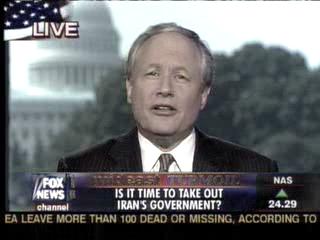
Dear Israel, if you have any missiles left over after you're done destroying Hezbollah, could you please fire one at Bill Kristol? Pretty please?


KRISTOL: . . . We have to stop [Iran] from getting nuclear weapons. We can try diplomacy. I am not hopeful about that. We have to be ready to use force.

FOX NEWS: You know, the down side, though, you know very well, to all of that being that we?re involved in Iraq and Afganistan. Also that Iran is much different than Iraq. It?s huge and more formidable.

KRISTOL: It is, but also the Iranian people dislike their regime. I think they would be -- the right use of targeted military force -- but especially if political pressure before we use military force -- could cause them to reconsider whether they really want to have this regime in power. There are even moderates -- they are not wonderful people -- but people in the government itself who are probably nervous about Ahmadinejad's recklessness. (my emphasis)


Here's a guy who was one of the driving forces behind our invasion of Iraq, and who said before the war that we'd be greeted as liberators. Now it's three years later, by his own admission George W. Bush has "driven us into a ditch" in Iraq -- and he's saying the exact same fucking things about Iraq.

If this were just some know-nothing blowhard spouting off nonsense at the Waffle House on Highway 31, that'd be one thing. But Kristol is a guy who wields considerable influence in the Republican Party. He runs a think tank that was obviously influential enough to help coax us into a war on the other side of the world; he was chief of staff to Bill Bennett when Bennett was secretary of education under Reagan, and then chief of staff to Vice President Quayle; he established The Weekly Standard, which, despite being wrong approximately as often as the sun rises in the East, has somehow still managed to maintain a large measure of credibility in right-wing circles. And now he's telling the Bush administration, and the country, that the Iranian people are going to slap their heads and go, "Oh! Yes! What were we thinking, electing this fool Ahmadinejad? Thank you, United States, for helping us see the light!" when the M1A1s start rolling into Azadi Square in Tehran.

Sometimes I wonder if Kristol is really this stupid, or if statements like this are just part of a calculated strategy designed to make it look reasonable by comparison when some Bush administration lackey stands up and says, "Well, I don't think we're going to invade Iran at this point in time, but I don't see anything wrong with invading . . . oh, say, Lebanon." I'm praying I won't have to find out which one.

Monday, July 17

Tell me how this ends.

Does anyone remember the "Cedar Revolution" in Lebanon? Does anyone remember how, in the wake of the assassination of Rafiq al-Hariri, thousands of Lebanese people took to the streets in protest and -- almost completely on their own -- worked their way out from under the oppressive thumb of Syria? Does anyone remember how happy everybody was about that, these average Lebanese Joes and Josephines rising up to prove that democracy could exist in the Middle East? That all happened in February and March of last year. Based on the events of the past few days, though, I'd have thought it was a lot longer.

I don't want to be seen as a knee-jerk pessimistic Eeyore, immediately jumping to the worst-case scenario no matter what, but it looks like all that progress is currently in the process of being blown into oblivion. If there's even a Lebanon left after the Israel-Hezbollah war is over with, who knows what it's going to look like? Maybe some Lebanese George Washington will magically rise up to rebuild the country into something beautiful again, but it seems just as likely that Syria or Iran will find a way to take advantage of the chaos and weasel another puppet regime back in there. Whatever kind of government emerges from the ashes, it's hard to imagine the people of Lebanon having many kind feelings toward Israel after the IDF blows their country to bits.

That, I think, is what makes me the most angry about all of this. Here's a country, once called "the Paris of the Middle East" for its culture and intellectual openness, that survived a brutal 15-year civil war and another 15 years of Syrian oppression to emerge as perhaps the best hope for actual democracy in the Middle East -- and both Hezbollah and Israel have evidently decided that all that progress and all that hope are worth erasing if it means they get to continue blasting the hell out of each other.

Obviously Hezbollah carries the lion's share of the blame in all this. They knew exactly what they were doing by kidnapping those two Israeli soldiers last month, and probably knew full well how much the conflict was going to widen itself over the ensuing weeks. Which meant that they had a good idea just how much destruction was going to be rained down on Lebanon from both sides, and were willing to allow that to happen just so that they could start an unwinnable war with the Israelis.

But Israel, for their part, obediently fell for the Hezbollah trap hook, line, and sinker: For want of two kidnapped soldiers, they gave Hezbollah the war it wanted. Look, I'm one of the last people who's going to sit here and argue that Israel doesn't have a right to defend itself, and I'm certainly not going to say that the kidnapping of two citizens is something Israel should've ignored. But look, I'm just going to come out and say it -- is reducing entire cities to rubble their idea of a proportional response to two kidnappings? And can the Israelis hold their heads high and feel like they haven't been drawn into something terribly pointless in all this?

For all we know, the kidnappings were all a plan hatched by Syria to goad Israel into a conflict that would sow chaos in Lebanon and create an environment in which Syria could sneak back in and re-install a friendly puppet government. Is that what Israel, or anyone else, wants?

Meanwhile, aside from dropping four-letter words in front of fellow world leaders and saying they're not going to tell the Israelis how to run their country, the U.S. government appears to be doing nothing. And back here in America, some of the same people who self-righteously hailed the sweep of democracy through Lebanon 17 months ago are now shrugging their shoulders and insinuating that the Lebanese should just shut up and take what's coming to them. So that's as long as your attention span lasted re the Cedar Revolution, huh? Seventeen months ago you were chiding us liberals for not being happy enough for the Lebanese, and now you're blasting us for supposedly being too concerned with their welfare. Seventeen months ago you hailed Lebanon's progress as a vindication for Bush's pro-democracy policies, and now you cheer as that progress is reduced to dust.

I don't want to beat a dead horse (or a dead Arab) here, but I think it bears repeating: Eventually the neo-con kill-'em-all-let-God-sort-'em-out right-wing cheerleaders are going to have to decide whether they want freedom for the poor benighted Arabs or whether they just want to bomb the shit out of 'em. If you want freedom and democracy for Lebanon, you probably shouldn't cheer as innocents are caught in the crossfire of this war; if you want freedom and democracy for Iraq, it seems poor form for you to fantasize about turning entire cities into parking lots, etc. etc. etc. Be a freedom-lover or be a bloodthirsty warmonger, but pick one, stick with it, and be honest and upfront about your choice. (Or as Bill Maher might say: "New rule -- you're officially banned from going ga-ga over pictures of hot women if you're only going to call them all terrorists later.")

But I'm not going to spend a lot of time sitting around and waiting for them to make up their minds. Right now I'm trying to make up my own mind -- whether to continue to hope that this whole thing can be resolved before Lebanon is completely wiped off the map, or to just give up on humanity entirely, move to Tahiti, and never pick up another newspaper or watch CNN ever again. I gotta tell you, at this point the latter's looking more and more attractive by the second.

A friend of mine summed it up best as we glumly hashed out this topic over drinks on Saturday. He said this crisis made him think back to a line spoken during an episode of "The West Wing" during similar circumstances: "Tell me how this ends!"

Leo McGarry: Mr. President, please -- Congress, the Joint Chiefs, the American Public, your own staff, everyone disagrees with your assessment of the situation.
President Bartlet: Killing Palestinians isn't going to make us feel safer. They'll kill more of us and we'll have to kill more of them. It's Russian Roulette with a fully loaded gun.
McGarry: We can't allow terrorists to murder our citizens without . . .
President Josiah Bartlet: Why would Palestinians murder American government officials? They never have before. They're deliberately provoking us, Leo. They know that we have to retaliate. They've studied us, they want us to overreact.
Leo McGarry: This isn't overreacting, this is the appropriate, balanced . . .
President Josiah Bartlet: Tell me how this ends, Leo! You want me to start something that may have serious repercussions on American foreign policy for decades, but you don't know how this ends!


My friend said that what he'd like to do more than anything is to sit down with Israel and ask them what they want the outcome of this whole thing to be, and then work backwards from there. Maybe that'd help in this case, because it seems like both sides in this conflict did a really good job early on of getting enraged but not a good job at all of pondering where that rage is likely to get them.

Not anywhere good would be my guess. I hope somebody figures that out before it's too late.

ADDED: Boy, it just gets better. What does Rush Limbaugh have in common with the Rapture fetishists of the evangelical right? They both think all this violence in Lebanon is a good thing. Read it and weep.

Thursday, May 4

How do you solve a problem like Moussaoui?: A modest proposal.


A member of al-Qaeda? I didn't even know Ashy Larry was Muslim!

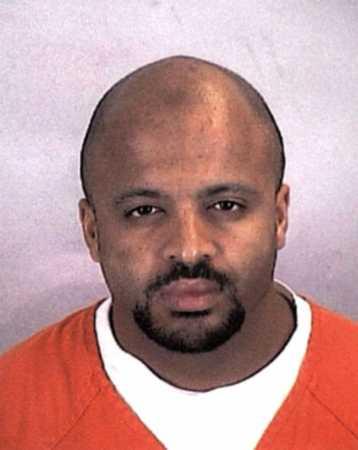
On the one hand, I don't think the world would be even the slightest bit worse off without Zacarias Moussaoui. Just because I'm staunchly anti-death-penalty doesn't mean I've never looked at a guy (I'm thinking folks like Kevin Underwood, John Couey, etc.) and thought, "Well, if they decided to gas this guy, I could probably look the other way." So I can sympathize with some of the 9/11 victims' family members who are pissed because Zacarias Moussaoui didn't get the death penalty.

But on the other hand . . . well, I am anti-death-penalty, and I can't think of a better example than the Moussaoui case of the kind of situation where the death penalty wouldn't bring nearly as much closure to the victims' families as they think it would. Or to the rest of us, for that matter. Sure, we could flip the switch on him and then gloat for maybe a day or so about how we'd just iced the last living 9/11 plotter, but at the end of the day we'd know that a) he wasn't really the last living 9/11 plotter, not by a long shot, and b) he probably didn't have that much to do with 9/11 to begin with. This is a guy who was effectively booted off the 9/11 operation for being a fuckup and who apparently couldn't even process enough about operating an airplane to be able to fly one into a building. We're not talking criminal mastermind here, in other words, and it's not going to do us a lot of good to imagine otherwise.

Still, there's got to be something we can do that's short of execution, yet worse than prison. My friend Chris had the perfect idea a while back, and while he's probably not the only person in the world to have ever thought of it, here it is anyway: Give Moussaoui a sex change. Turn him into a woman and then fly him out to Teheran or Islamabad or Kabul or wherever, throw a chador on him, and dump his ass out on the street. Then say "bye-bye" and leave him to live out the rest of his life as a woman in the kind of Islamic fundamentalist theocracy he apparently craves. He'll be a freak, so the radical Islamists won't want him back, and he'll have to live out the rest of his life in conditions that, in a lot of ways, are worse than prison.

Using state-of-the-art computer-aided design technology, I was able to create a composite portrait of what Moussaoui might look like as a post-operative transsexual:


Well, that's a start . . . but it's missing one final touch:


Ahh, yes. If the freakish she-male appearance wasn't enough to make him a complete outcast, the Judeo-Christian bling should finish the job. Better get a burkha quick, ese!

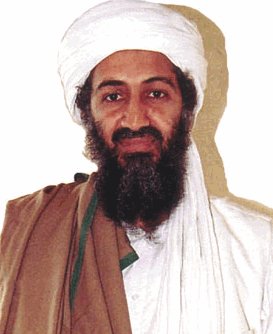
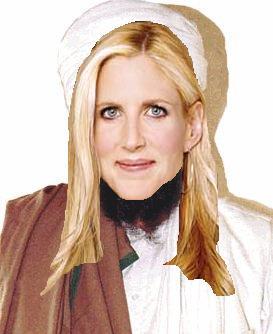
I was also able to apply this technology to give an idea of what Osama bin Laden (about 6'5", 160 lbs.) would look like after the same treatment. Here's Osama as he looks currently:


Now we see Osama after gender-reassignment surgery:


Eesh. Well, there are still some bugs to be worked out, but you can kind of see what I'm getting at here. What say you?

Monday, May 1

Separated at birth.


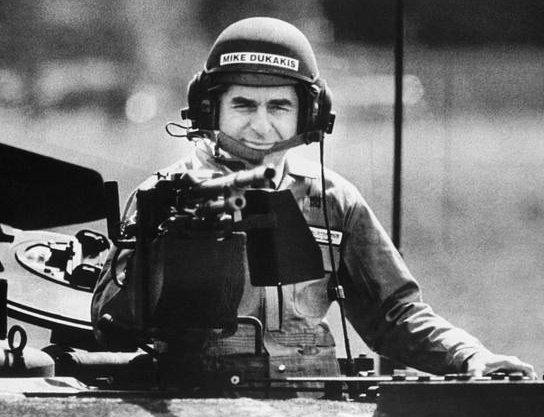
Three years ago today . . .


. . . 18 years ago this September.

Seriously, if you can look at that top photo and not feel utter despair at the fact that such an outrageously contrived, witheringly cynical photo op could have ever been considered noble or admirable in this country, seek help. Please.

Thursday, April 13

[Almost] Everything you ever wanted to know about *nuke-you-ler weapons* but were (understandably) afraid to ask.


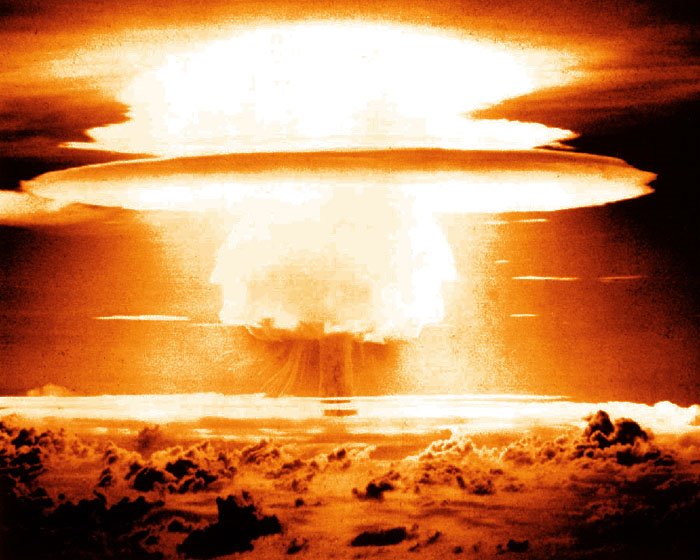
Castle Bravo: Bikini Atoll, Marshall Islands, March 1, 1954.

I hope nobody gets too freaked out by this, but I've had a long-standing fascination with nuclear weapons. That's a fascination, you understand, not a fetish: I hope to God we never ever use one again, and that one never ever gets used on us, but that said, I still find it immensely fascinating that any human being or group of human beings could have ever packed such awesome destructive force into such a comparatively small object. I've watched videos of the Operation Ivy and Operation Castle thermonuclear test detonations, and as awe-inspiring as those explosions are even in a tiny QuickTime viewing window, I can only imagine the mix of emotions I would've felt had I been standing there in 1952 or 1954 witnessing them in person.

I mention this because of the recent and much-publicized New Yorker article in which Seymour Hersh quotes numerous government officials who believe that a full-scale military operation against Iran may be in the offing. It's worrisome enough that we're already planning for a third full-scale attack in less than five years without having brought stability to the first two countries we invaded (Afghanistan and Iraq), but to me, at least, it's altogether terrifying that people are talking about using tactical nuclear weapons in such an operation, which would basically be the first instance in history in which a nuclear first strike had been leveled against a country that did not provoke it.

As Tristero alludes to in the post "How To Make A Tactical Nuclear Weapon," the qualifier "tactical," particularly when used in reference to a very useful, utilitarian-sounding weapon like a "bunker buster," seems to have the effect of making some people believe that it really isn't that big a deal. Technically, there is a difference between tactical nuclear weapons and the strategic nuclear weapons that were used against Hiroshima and Nagasaki and thus have pretty much defined our perception of nuclear weapons for the past 60 years; however, the discrepancy is largely arbitrary, and has much more to do with intent and strategy than with the actual design of the weapon itself. Theoretically, you could take a warhead that had been designed or classified for whatever reason as a strategic weapon, come up with a more specific military target for it, and abracadabra, now it's merely "tactical." Though merely, as I hope to explain, would be a poor choice of words indeed.

The "bunker-busting" tactical nuke that Hersh's piece specifically cites as a possible weapon of choice is the B61-11, also known as the B-61 Mod 11, which you can read about here. As the GlobalSecurity.org article says, this tactical weapon can carry a nuclear yield ranging from less than a kiloton to several hundred kilotons; conventional wisdom dictates that anything under a megaton can be called a tactical nuclear weapon. But what does all this mean?


First of all, it means that as bunker-busters go, the B61-11 can do considerably more damage to a bunker than, say, Tiger Woods.

Here's the part where I get to drop some science I've been wanting to talk about on this blog for a while now, some info I found endlessly fascinating, and more than a little scary, when I was researching all this stuff a few years ago. A kiloton is the basic unit of measurement in determining the yield, or destructive force, of a nuclear weapon; a one-kiloton (kt) bomb would explode with the destructive force of roughly 1,000 tons of TNT, a 12-kt bomb would be equivalent to 12,000 tons of TNT, and so on.

A megaton, as you can probably guess, is an order of magnitude bigger than a kiloton -- one megaton (Mt) equals 1,000 kilotons, or one million tons of TNT. Theoretically, then, it would be possible to have a gigaton weapon, or the equivalent of one billion tons of TNT, though all the nuclear explosions that have ever occurred on earth "only" add up to a total of 510.4 megatons.

The majority of nuclear weapons in the stockpiles of countries like the United States and Russia are in the hundreds-of-kilotons range. However, the Ivy and Castle nuclear tests the U.S. conducted in the South Pacific in the 1950s included detonations of bombs with yields above 10 megatons; the most powerful device ever detonated by the U.S. was in the Castle Bravo test, which yielded 15 Mt. Seven and a half years later, the Soviets detonated "Tsar Bomba," which had a yield of 50 Mt -- to this day the largest nuclear device, by a wide margin, ever exploded.


Tsar Bomba, the "king of bombs": Novaya Zemlya, Russia, October 30, 1961. The mushroom cloud reached about 60 km into the sky; the shockwave could be detected by seismometers even on its third pass around the earth.

Now, all these measurements still may be a little difficult to conceptualize, so maybe it'll be a little easier if we compare them to the two most famous nuclear detonations in history -- those at Hiroshima and Nagasaki. The "Little Boy" device dropped at Hiroshima had a yield now estimated at about 15 kilotons, or 15,000 tons of TNT; the "Fat Man" device dropped on Nagasaki was somewhat more powerful, with a yield of 21 kt. If you look closely at the progression of American and Soviet nuclear development since those first detonations in 1945 (FYI, this site is an excellent place to start doing that), you start to get the impression that the Hiroshima and Nagasaki bombs, as horrific as they were, were almost cream puffs compared to some of the artillery we'd be packing later. Do the math and you discover that Ivy Mike, the United States' first successful detonation of a fusion-based thermonuclear device, packed the explosive force of nearly seven hundred Hiroshimas. In this Laughing Boy post, which I credit with having inspired a lot of the research I did into nuclear weapons and their various detonations, he quotes a book that records some of the statements and emotions of America's top nuclear scientists as they witnessed the Ivy Mike shot. Upon viewing the lingering, 135,000-foot-tall, thousand-mile-wide mushroom cloud, some of those scientists started wondering "if things had gone too far." The Nuclear Test Ban Treaty was ratified in 1963 based on fears that, among other things, a too-powerful nuclear detonation might accidentally ignite the entire atmosphere.


Hiroshima, Japan, August 6, 1945: A yawner of a fireworks display compared to most of what's in our nuclear stockpile these days.

So.

Hopefully I've already made the point that a nuclear weapon, any nuclear weapon -- whether it's a big-daddy multi-megaton "strategic" device or something that folks at the Pentagon try to minimize as just a "tactical" nuke -- is some serious shit. But just to make sure there's no misunderstanding, let's go back to that original Hiroshima explosion, which was 15 kilotons. Those in the know about the B61-11 "bunker buster" project say that it can be loaded up with anywhere from <1 kt to many hundreds of kilotons, but again going back to the GlobalSecurity.org article, the government has stated that only 10 kilotons is probably not enough to "survive penetration into many types of terrain in which hardened underground facilities are located." What this means is that if we're going to wield a B61-11 with any efficacy against the underground nuclear-research targets Hersh talks about attacking, it'll probably have to pack considerably more than 10 kilotons of force -- meaning we'll be using bombs, "tactical" or no, that are more powerful than what we dropped on Japan in 1945. The consequences of which, of course, will be enormous.

So let's be very clear about this: Whether or not the Bush administration can make the case that invading Iran is a necessary option, whether we attack the entire country of Iran or just the particularly evil-looking military ones, whether or not we restrict our use of nuclear weapons to tactical bunker-busters, if we drop a B61-11 on an Iranian nuclear facility, we will at that point be involved in a nuclear war. That's the reality, folks. So whatever else is said over the course of the discussions this country will have with respect to an invasion of Iran, I certainly hope nobody will be foolish enough to say that it won't be that big a deal, or that all we have to do is throw a few B61-11s into a few nuclear-research facilities and boom, problem solved. Problem solved? Problem created, kiddo. Because at that point, not only will we still be the only country in the world to have ever used a nuclear weapon against another country, we will also have earned the dubious distinction of being the only country in the world to have launched an unprovoked nuclear first strike against another country. No ifs, ands, or buts about it -- if we do this, that's what we'll be.

I can only hope that with this knowledge, America as a whole will be more circumspect about this potential invasion of Iran than they were about Iraq. As one commenter pointed out, the American public is pretty sour on Bush's handling of the Iraq situation right now, so I'm not too worried about the general populace suddenly getting a hankering to go bomb the crap out of another country. The Bush administration, however, is gonna do what the Bush administration is gonna do, and if any administration in the history of this country has proven itself to be incapable of learning from its mistakes, it's this one. Before, the question "Do you trust these guys with their finger on the nuclear button?" was one that could be shrugged off as that's-probably-never-gonna-happen irrelevant, but that's looking less and less like the case now.

Let's all be very clear and un-misinformed about the stakes here, kids. It's bad enough that we as a country were overly blasé about Iraq, carelessness that we have paid for with a miserable quagmire in that country and nearly 2,400 flag-draped coffins. But if we swagger toward Teheran with that same sort of nonchalance, the consequences will be immeasurably worse.

Your turn.

I had a big post in mind about Seymour Hersh's New Yorker article on what he claims are the Bush administration's plans to wage war on Iran, as well as the possible consequences of such an attack -- particularly if nuclear weapons are involved. But I'm still trying to figure out what I want to say about that, so in the meantime I'll turn it over to y'all. Consider this a semi-open thread to discuss the following questions:

1. Do you think the possibility of an attack on Iran is real?

2. Do you think such an attack is (or will be) necessary, and would you be in favor of it?

3. Do you think there is credibility to the fear that the U.S. might use tactical nuclear weapons in such an attack, and if so, does that influence in any way your answer to #2?

Let's try and keep this civil and ad-hominem-free -- and on topic. I'm really interested in finding out what people are thinking about this, or if they're thinking anything at all.